
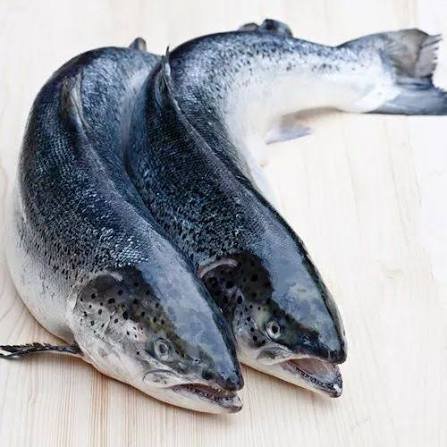
Salmon is one of the world’s most popular and nutritious fish. It is found naturally in the North Atlantic and North Pacific oceans, with many species migrating from the ocean to freshwater rivers to spawn.
Nutrition (per 100 g, cooked)
- Calories: ~200–210 kcal
- Protein: ~22–25 g
- Fat: ~12–13 g
- Omega-3 fatty acids: High
- Rich in Vitamin D, Vitamin B12, Selenium, and Potassium
Health Benefits
- Supports heart health with omega-3 fatty acids.
- Promotes brain function and eye health.
- Helps build and repair muscles with high-quality protein.
- Contributes to healthy skin and hair.
- Supports bone health due to its vitamin D content.
Popular Ways to Cook
- Grilled
- Baked
- Pan-seared
- Smoked
- Steamed
- Air-fried
Taste and Texture
Salmon has a rich, buttery flavor and a firm, flaky texture. Wild salmon is generally leaner and has a stronger flavor, while farmed salmon is usually milder and higher in fat.
Common Types
- Atlantic salmon
- Sockeye salmon
- Coho salmon
- Chinook salmon (also called King salmon)
- Pink salmon
Salmon is widely enjoyed worldwide and is considered one of the healthiest seafood choices due to its excellent nutritional profile.
Description:
Distinctive dark skin with rich, deep-orange to reddish flesh
Bold, buttery flavor with a firm, moist texture
High in Omega-3 fatty acids, great for heart and brain health
Individually Quick Frozen (IQF) to retain freshness and nutrients
Excellent source of protein, Vitamin D, and B12
Available as whole fish, fillets, or steaks
Vacuum-packed for hygiene and long freezer shelf life
Free from artificial additives and preservatives
Sourced from wild-caught or responsibly farmed origins
Holds up well during grilling, baking, and pan-searing




Reviews
There are no reviews yet.